
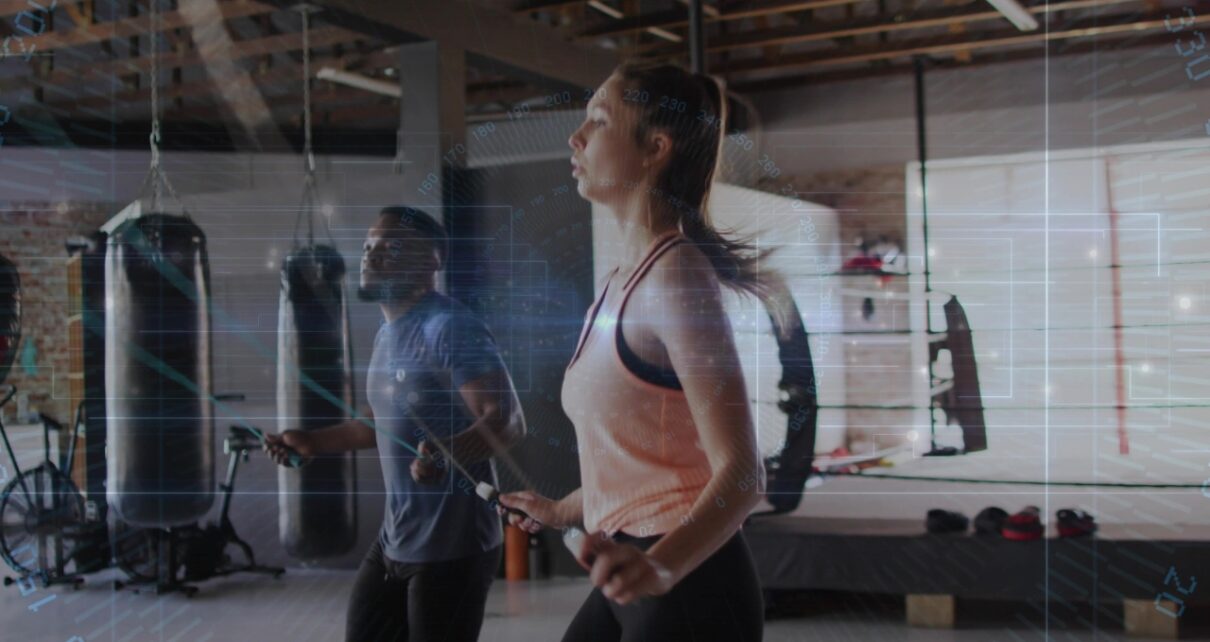
EPOC (Excess Post-Exercise Oxygen Consumption) is a legitimate metabolic boost triggered by intense exercise, and HIIT reliably produces more of it than steady-state cardio.
The catch? It contributes roughly 6–15% of the calories burned during the workout itself, not the “24 hours of fat-burning” that most gym marketing promises.
EPOC stands for Excess Post-Exercise Oxygen Consumption. It describes the elevated rate of oxygen intake your body maintains after exercise has ended, above and beyond what you’d normally consume at rest. Since oxygen drives energy production, consuming more of it means burning more calories. That’s the afterburn effect.
The concept was first described in the early 20th century under the term “oxygen debt,” coined by physiologists A.V. Hill and Otto Meyerhof in the 1920s. The original theory was simple: you run into anaerobic debt during hard exercise, and your body pays it back with elevated oxygen use during recovery.
Later research refined this considerably; it’s not just “repaying a debt,” it’s a complex web of metabolic housekeeping that happens to require energy.
What Your Body Is Actually Doing During EPOC
After intense exercise, your physiology is running multiple simultaneous repair and restoration processes, all of which require oxygen, and therefore burn calories. Exercise scientists divide this into two distinct phases.
The Fast (Alactic) Component lasts just 2–3 minutes. Your body rapidly restores ATP and phosphocreatine (PCr) stores depleted during exercise, re-saturates myoglobin with oxygen, and restores oxygen levels in your blood and tissues. About 50% of PCr stores are replenished within just 30 seconds, and 75% within 60 seconds. It uses roughly 2–4 litres of oxygen total.
The Slow (Lactacid) Component is the one that actually matters for the afterburn effect. It can last 30 minutes to several hours, depending on intensity, and it involves six specific processes, each one burning calories:
- ATP and PCr resynthesis, rebuilding immediate energy reserves post-workout
- Lactate clearance, about 65% of lactate is oxidized back into the Krebs cycle, 20% gets converted to glycogen via the Cori Cycle, and the rest becomes amino acids or glucose, all energy-costing processes
- Glycogen resynthesis, depleted muscle and liver glycogen stores are rebuilt; the harder you train, the more energy this takes.
- Elevated body temperature, your core temperature rises during intense exercise, and the metabolic cost of managing heat stays elevated during the cool-down phase
- Hormone clearance, HIIT causes sharp surges in epinephrine and norepinephrine; until these are cleared from the bloodstream, your resting metabolism stays elevated. HIIT also spikes HGH by close to 450%. which drives continued fat oxidation post-workout
- Protein turnover and muscle repair, research on EPOC mechanisms lists protein turnover as one of the significant slow-phase drivers, particularly after resistance-based work.
Why HIIT Produces More EPOC Than Steady-State Cardio
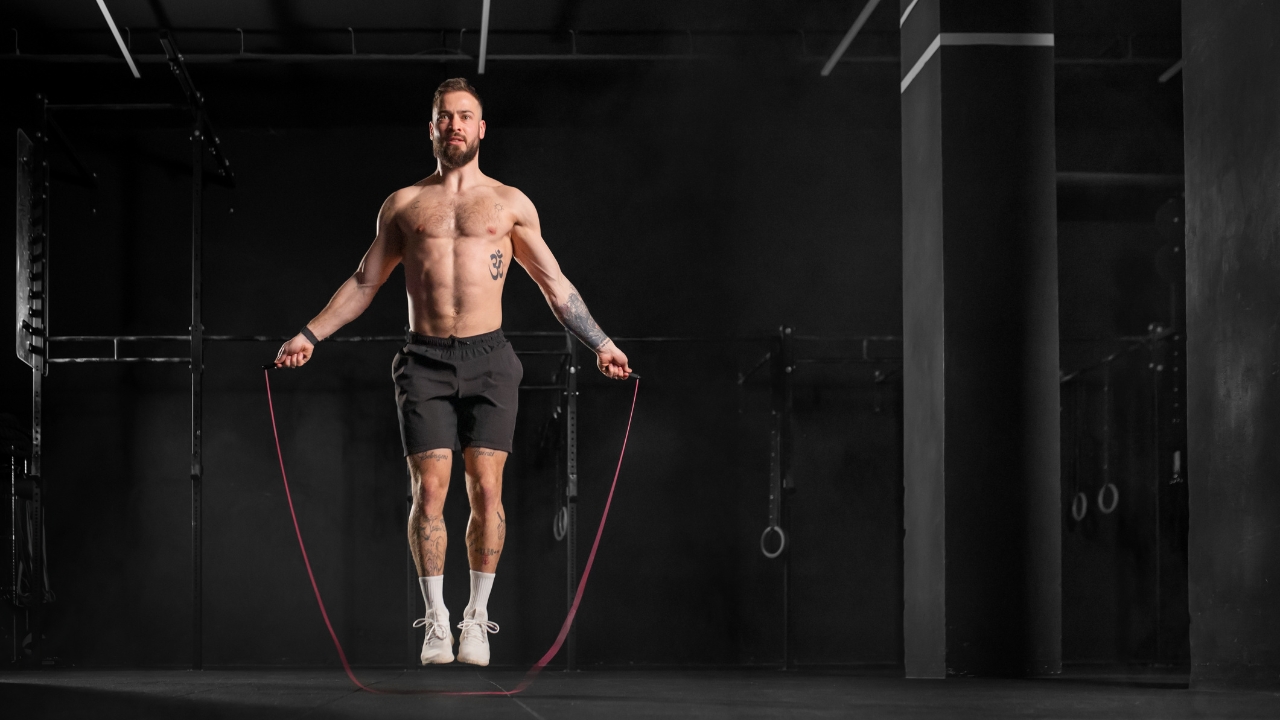
Research from exercise physiology is clear on this: a 20-minute HIIT session pushing you to 90% VO₂max generates a fundamentally different EPOC response than a 45-minute moderate jog, even if the jog burns more calories during the session itself. Intensity is the multiplier. Duration just adds linearly.
A 2024 study published in Scientific Reports directly compared calorie-matched HIIT and moderate-intensity continuous training (MICT) in people with obesity. EPOC was meaningfully higher after HIIT (66.2 kcal vs. 53.9 kcal after MICT).
More importantly, the rate of fat oxidation during the EPOC period was also higher after HIIT, 37.9% of energy from fat versus 30.1% after moderate cardio. Not only more afterburn, but more of it drawn from fat stores.
A broader systematic review in the Journal of Strength and Conditioning Research found that while the HIIT advantage in the immediate first hour post-exercise is modest, it becomes larger when measured over a full 24-hour window. Sprint interval training (SIT), the most extreme form of HIIT, showed even more pronounced advantages at every measured time point.
How Many Extra Calories Does EPOC Actually Burn?
View this post on Instagram
A comprehensive review on EPOC concluded that even in protocols designed to maximize afterburn, post-exercise oxygen consumption represents only 6–15% of the net calorie cost of the exercise session. If you burned 300 calories during your HIIT workout, you’re looking at roughly 18–45 extra calories from EPOC. Real, but not transformative on its own.
The “burning calories for 24 hours” claim has a grain of truth in it. Technically, elevated oxygen consumption can be detected up to 24 hours after a truly intense session.
But analysis from exercise physiologist Len Kravitz makes an important point: the meaningful calorie burn drops off sharply after the first hour or two. A Colorado State University study confirmed that while EPOC was measurable at 24 hours post-sprint interval training, the vast majority of the extra expenditure happened in the first 60 minutes. After that, you’re talking about very small increments.
The real value of EPOC is cumulative across weeks and months of training, not per session. Doing HIIT 3x per week instead of 3x moderate steady-state adds roughly 50–150 extra calories per week from afterburn alone.
That’s a consistent bonus, especially stacked on top of all the other HIIT adaptations like improved VO₂max, insulin sensitivity, and mitochondrial density.
Individual Factors That Affect Your EPOC Response

Not everyone gets the same afterburn from the same workout. A few things meaningfully shift the equation:
Training status produces a counterintuitive result: research shows that well-trained individuals actually return to their resting metabolic rate faster after exercising at the same relative intensity.
Their bodies are more efficient. But fit people are also much better fat-burners overall, so the afterburn period is more metabolically productive even if it’s shorter.
Intensity threshold is critical. Studies consistently show that only intensities above roughly 80–85% of max heart rate produce a meaningfully elevated EPOC. Below that line, you’re in the linear zone; more duration helps, but you don’t get the exponential intensity bonus that makes HIIT special.
Muscle mass matters because people with more muscle have higher resting metabolic rates and tend to sustain elevated post-exercise metabolism longer. This is one reason combining HIIT with resistance training is so effective for body composition.
How to Actually Maximize EPOC

Push above 80% max heart rate during intervals. This is the threshold where EPOC shifts from linear to exponential. Anything below it and you’re leaving the afterburn bonus on the table. Aim for 85–90% VO₂max during your work intervals.
Keep work intervals between 30 seconds and 3 minutes at near-maximal effort. Research using 3-minute bouts at 90% VO₂max with 2-minute recovery periods showed strong EPOC responses.
Tabata (20s on / 10s off) works well too. The key is genuine intensity, not just feeling tired, but actually pushing close to your cardiovascular and muscular ceiling.
Combine HIIT with resistance training. A study comparing RT and HIIT in fit women found both elevated resting metabolic rate by similar amounts 14 hours post-workout.
You’re hitting two different EPOC mechanisms: the acute cardiovascular/hormonal response from HIIT, plus the slower protein-turnover-driven elevation from resistance work. Circuit-style training that blends both is particularly effective.
Eat protein post-workout. Protein has a thermic effect of around 20–30%, meaning 20–30% of its calories are burned in the process of metabolizing it. Eating protein after HIIT enhances the muscle repair that drives slow-component EPOC, and adds its own metabolic cost on top.
Protect your sleep and recovery. You need to hit high intensity to trigger meaningful EPOC genuinely. If you’re training hard every day and accumulating fatigue, your “90% intervals” become 70% intervals, and the EPOC response shrinks accordingly. Quality over frequency.
The Bottom Line
@maximilian.moves Here’s why your body fat isn’t leaving… even if you’re doing everything right. You’re doing the workouts. You’re hitting your macros. You’re staying consistent. But your body’s holding on to that stubborn fat. What you might need is a different training approach. One where you focus on quick, short, powerful bouts of effort. Where you’re literally huffing and puffing to catch your breath. Why are sprinters so lean ? Short burts of extremely powerful efforts. Same with boxers. You need metabolic disruption. You need to spike the amount of oxygen your body demands. That’s how you trigger this thing called EPOC. This turns your body into a fat-burning machine. Partner this with high protein caloric deficit, you can add 1-2 long duration steady state cardio days in there and I’m telling you will be golden. My summer shred program hits exactly this. All from home. 1 kettlebell. 1 band. Your body weight. Comment “MOVES” for program access. Stay tuned because June 1st there will be a number of new programs coming out to keep you engaged and excited to train. #fitness #workout #fatburn #workoutmotivation #calisthenics #kettlebell #homeworkout ♬ original sound – Maximilian Moves
The afterburn effect is real. HIIT is the most time-efficient way to maximize it. What it isn’t is a metabolic loophole.
The honest picture is this: EPOC gives you a modest, consistent caloric bonus on top of an already excellent training stimulus, and that bonus is meaningfully larger with HIIT than with any other training modality.
High-intensity boxing sessions follow the same principle, which is why boxing helps you lose weight fast by pushing your body into that elevated post-exercise burn.
Train hard, push past 85% during your work intervals, combine it with resistance training, and eat enough protein. Over months of consistent training, the EPOC adds up.
But the real prize is the adaptations your body makes to handle that intensity, and those are worth far more than any post-workout calorie count.